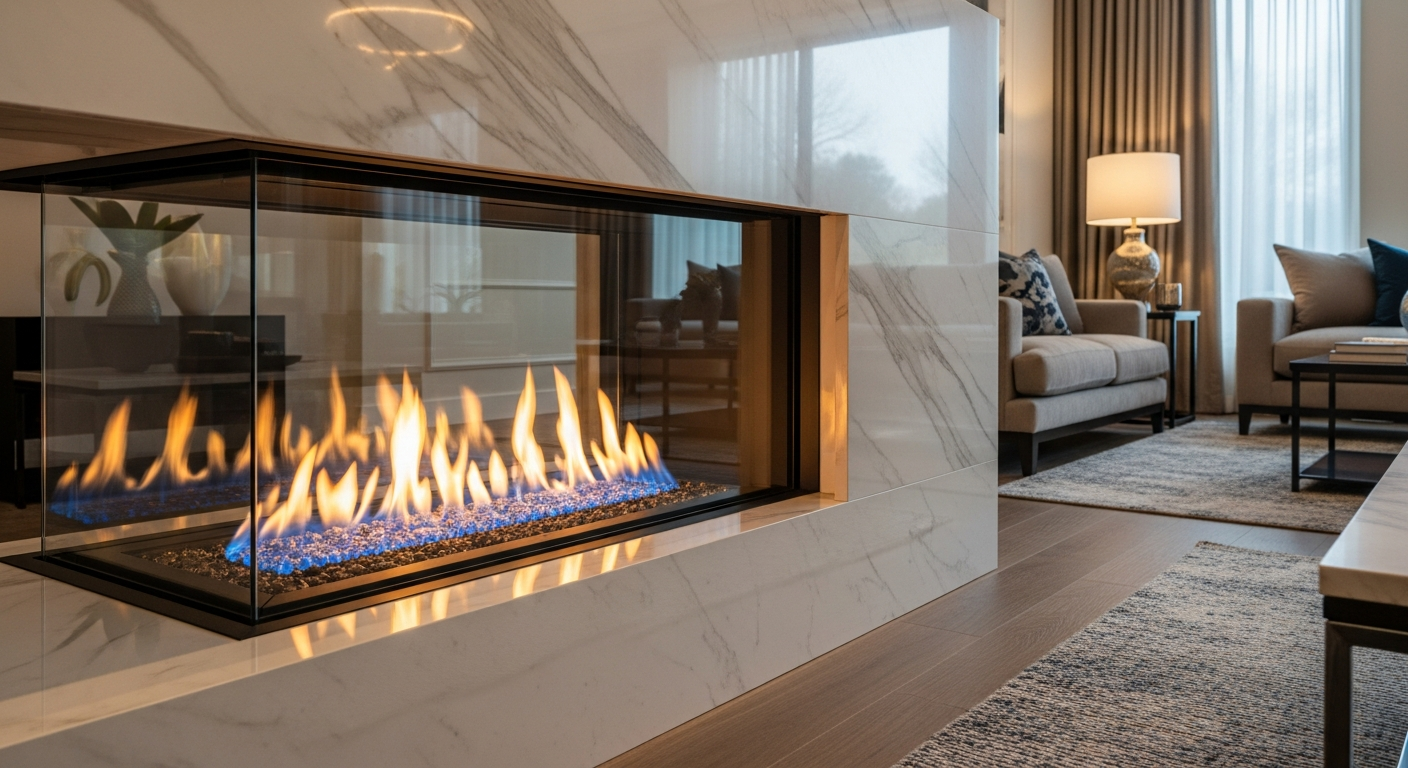
Gas fireplaces offer convenience, clean operation, and good efficiency. This comprehensive guide helps you choose the right gas fireplace for your Romanian home, covering fuel types, venting options, efficiency, installation, and everything you need to know.
Why Choose Gas?
Advantages
Convenience:- On/off switch operation
- No fuel handling required
- Instant heat and flame
- Very easy to use
- Can be controlled remotely (some models)
- No ash or soot
- Minimal cleaning required
- No fuel storage needed
- Cleaner than wood
- Less mess overall
- 70-90% efficiency (modern models)
- Controllable heat output
- Efficient fuel use
- Good heat distribution
- Can be very efficient
- Consistent operation
- No fuel quality issues
- Reliable heat output
- Works in various conditions
- Less affected by weather
- Can work in apartments (with proper venting)
- Various venting options
- More installation flexibility
- Can retrofit more easily
- Direct vent options available
Considerations
Installation Requirements:- Requires gas connection
- Venting needed (usually)
- Professional installation required
- May need gas line installation
- Installation costs
- Gas costs (€300-€800/year)
- Annual service recommended
- Fuel costs ongoing
- May be expensive depending on usage
- Less control over fuel costs
- Not real wood flames
- Less traditional feel
- May look less authentic
- Different sound/ambiance
- Some prefer wood authenticity
Natural Gas vs LPG
Natural Gas
Characteristics:- Supplied via pipeline
- Continuous supply
- Lower cost per unit
- More convenient
- Requires gas connection
- Available in urban areas
- Requires connection to gas network
- May need connection installation
- Check availability in your area
- Connection costs vary
- Lower fuel cost (€300-€800/year typical)
- Connection costs if needed
- More economical long-term
- Predictable costs
- Good value
- Homes with gas connection
- Urban areas
- Regular use
- Lower running costs desired
- Convenient supply
LPG (Liquefied Petroleum Gas)
Characteristics:- Stored in cylinders/tanks
- Portable option
- Higher cost per unit
- Requires tank/cylinder
- More flexible location
- Available everywhere
- No pipeline needed
- Tank installation required
- More flexible
- Good for rural areas
- Higher fuel cost (€500-€1,500/year typical)
- Tank/cylinder costs
- More expensive than natural gas
- Refill costs
- Less economical
- Areas without gas network
- Rural properties
- Flexible location needs
- Occasional use
- Where natural gas unavailable
Choosing Between Natural Gas and LPG
Choose Natural Gas If:- Available in your area
- Want lower running costs
- Regular use planned
- Have or can get connection
- Urban location
- Natural gas not available
- Rural location
- Flexible location needed
- Occasional use
- Willing to pay higher costs
Venting Options
Direct Vent Systems
Characteristics:- Vents directly outside
- Sealed combustion system
- Very efficient
- No room air used
- Best efficiency option
- Highest efficiency (85-90%)
- No room air depletion
- Better heat retention
- Safer operation
- Excellent performance
- Requires outside wall access
- Professional installation
- More complex than vent-free
- Worth the efficiency gain
- Popular choice
- Maximum efficiency desired
- Regular heating use
- Better performance wanted
- Worth installation complexity
Traditional Vented Systems
Characteristics:- Uses existing chimney/flue
- Room air for combustion
- Good efficiency (70-80%)
- Requires flue/chimney
- Traditional approach
- Can use existing chimney
- Good efficiency
- Reliable operation
- Well-established technology
- Good option if chimney available
- Requires flue/chimney
- Uses room air
- Slightly lower efficiency
- Still good performance
- Check chimney compatibility
Vent-Free Systems
Characteristics:- No venting required
- Uses room air
- Lower efficiency (60-70%)
- Subject to regulations
- May be restricted
- Simplest installation
- No venting needed
- More flexible placement
- Lower installation cost
- Easier retrofit
- Subject to local regulations
- May be restricted in some areas
- Requires adequate room ventilation
- Lower efficiency
- Check local codes
- Check local building codes
- May be prohibited in some areas
- Requires proper room ventilation
- Size limitations may apply
- Professional assessment recommended
Efficiency and Cost Comparison
Efficiency Ratings
Modern Gas Fireplaces:- Efficiency: 70-90%
- Direct vent: 85-90%
- Traditional vented: 70-80%
- Vent-free: 60-70%
- High-efficiency models available
- Venting system type
- Model design
- Technology used
- Proper operation
- Maintenance
Cost Comparison
Natural Gas:- Fuel cost: €300-€800/year (regular use)
- Lower cost per kW
- More economical
- Predictable costs
- Good value
- Fuel cost: €500-€1,500/year (regular use)
- Higher cost per kW
- Less economical
- Refill costs
- More expensive
- With existing connection: €500-€2,000
- New gas line: €1,000-€3,500
- Direct vent: €1,000-€2,500
- Varies by complexity
- Initial: €4,000
- Installation: €1,500
- Running (10 years): €5,000
- Maintenance: €2,000
- Total: €12,500
Installation Complexity
Installation Requirements
Gas Connection:- Existing connection: Simpler
- New connection: More complex
- Professional required
- Safety critical
- Must meet codes
- Direct vent: Outside wall access needed
- Traditional: Flue/chimney required
- Vent-free: No venting (check regulations)
- Professional installation essential
- Safety critical
- Always required for gas
- Safety critical
- Must meet codes
- Warranty protection
- Peace of mind
Installation Timeline
With Existing Connection:- Planning: 1-3 weeks
- Installation: 1-2 days
- Inspection: 2-3 days
- Total: 2-4 weeks
- Planning: 2-4 weeks
- Gas line: 1-2 days
- Installation: 1-2 days
- Inspection: 2-3 days
- Total: 4-6 weeks
Safety Considerations
Essential Safety Measures
Professional Installation:- Always required
- Ensures safety
- Meets codes
- Warranty protection
- Peace of mind
- Critical for safety
- Removes combustion gases
- Prevents CO buildup
- Must be correct
- Professional verification
- Install near fireplace
- Test regularly
- Replace batteries
- Essential safety equipment
- Never ignore alarms
- Annual service recommended
- Prevents problems
- Maintains safety
- Ensures efficiency
- Worth the investment
- Know smell of gas
- Know what to do
- Evacuate if smell gas
- Call emergency services
- Never ignore gas smell
Best for Apartments vs Houses
Apartments
Considerations:- Building regulations
- Venting options
- Gas availability
- Space constraints
- Neighbor considerations
- Direct vent (if outside wall access)
- Vent-free (if permitted)
- Check building rules
- Professional assessment needed
- May be restricted
- Convenient operation
- Clean, no mess
- Good for apartments
- Controllable heat
- Reliable
Houses
Advantages:- More installation options
- Easier venting solutions
- More space
- Less restrictions
- Better for primary heating
- All venting types possible
- More flexibility
- Can be primary heat
- Better integration
- More choices
Top Gas Fireplace Brands
Premium Brands
Kalfire:- Dutch quality
- Modern designs
- Good efficiency
- Reliable performance
- Well-regarded
- Polish brand
- Good value
- Modern aesthetics
- Reliable
- Popular choice
- German engineering
- High quality
- Excellent efficiency
- Reliable
- Premium option
Choosing the Right Gas Fireplace
Decision Factors
1. Gas Availability:- Natural gas available? → Natural gas
- No natural gas? → LPG
- Check availability first
- Maximum efficiency → Direct vent
- Good efficiency → Traditional vented
- Simplicity → Vent-free (if permitted)
- Outside wall access? → Direct vent possible
- Existing chimney? → Traditional vented
- No venting options? → Vent-free (check regulations)
- Regular heating → Direct vent or traditional
- Occasional use → Any option
- Primary heat → Higher efficiency models
- Lower budget → Basic models
- Mid-range → Good quality options
- Higher budget → Premium brands
FAQ
Q: Do gas fireplaces need a chimney?A: Not always. Direct vent systems vent directly outside. Traditional vented systems use chimney/flue. Vent-free systems need no venting (check regulations).
Q: What's the difference between natural gas and LPG?A: Natural gas is supplied via pipeline (lower cost). LPG is stored in tanks/cylinders (higher cost, more flexible location). Choose based on availability and cost.
Q: How efficient are gas fireplaces?A: Modern gas fireplaces achieve 70-90% efficiency. Direct vent systems reach 85-90%. Traditional vented: 70-80%. Vent-free: 60-70%.
Q: Can I install a gas fireplace myself?A: No. Gas installation requires professional expertise for safety and compliance. Incorrect installation creates serious safety risks.
Q: How much does gas cost to run?A: Natural gas: €300-€800/year (regular use). LPG: €500-€1,500/year. Depends on usage, efficiency, and local gas prices.
Q: Are vent-free gas fireplaces safe?A: Yes, when properly installed and used according to manufacturer instructions. However, they're subject to local regulations and may be restricted in some areas.
Q: Do gas fireplaces need electricity?A: Many modern gas fireplaces need electricity for ignition and controls. Some can work without electricity. Check manufacturer specifications.
Q: How often do gas fireplaces need service?A: Annual professional service is recommended. Includes inspection, cleaning, efficiency check, and safety verification. Prevents problems and maintains efficiency.
Q: Can gas fireplaces heat a whole house?A: Possibly, depending on house size, insulation, and fireplace output. Many use gas fireplaces as primary or supplemental heat. Proper sizing essential.
Q: What maintenance do gas fireplaces need?A: Annual professional service, regular glass cleaning, occasional component cleaning, verify operation, address issues promptly. Less maintenance than wood.
Next Steps
Now that you understand gas fireplaces:
- Check gas availability - Natural gas or LPG in your area
- Assess venting options - What's possible in your space
- Calculate heat needs - Determine required output
- Compare options - Research models and brands
- Get professional advice - Book consultation for guidance
Related Guides
Explore Products
Gas fireplaces offer convenience, clean operation, and good efficiency. With proper selection and installation, they provide reliable heating and ambiance for Romanian homes. Book a consultation: Contact Seminee Dragon