Wood vs Gas vs Electric: Which Fireplace is Right for You?
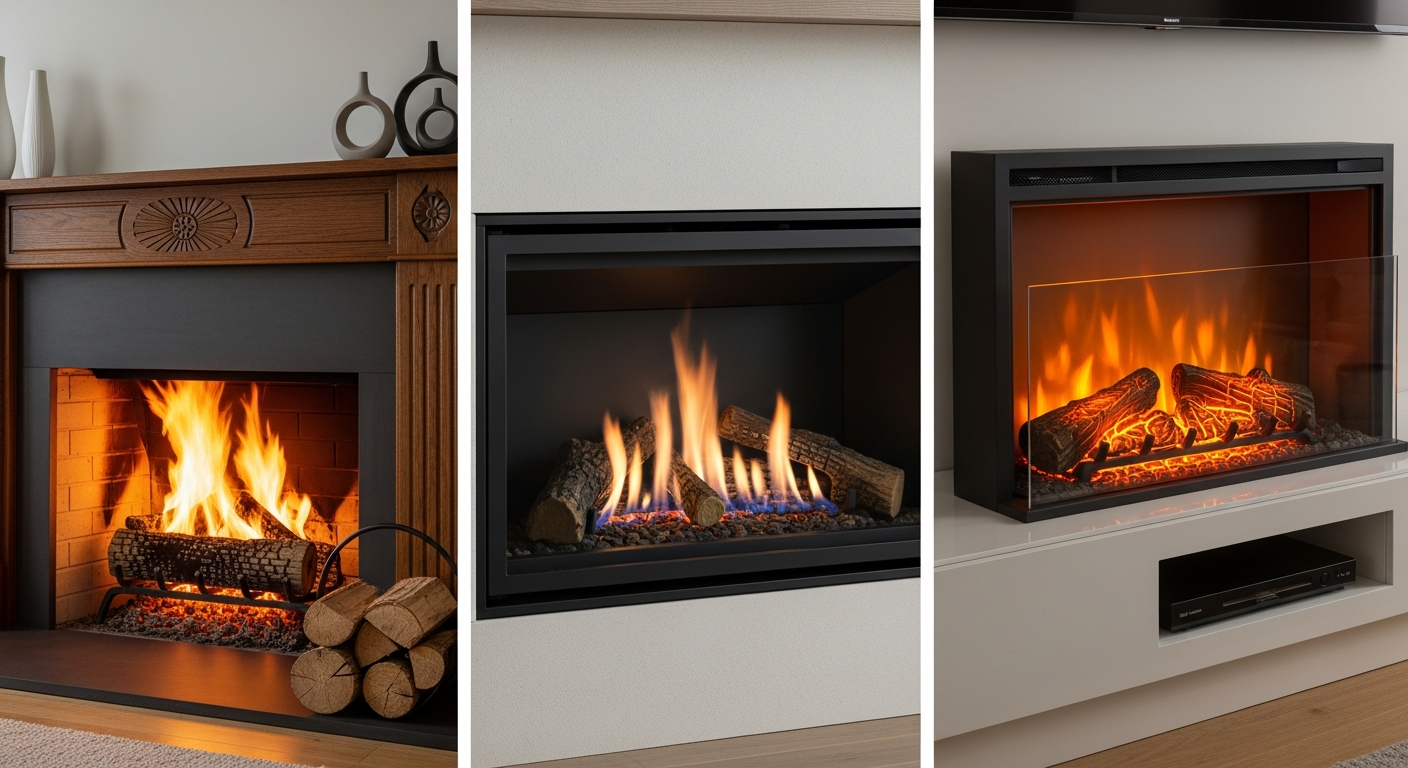
Choosing between wood, gas, and electric fireplaces is one of the most important decisions you'll make. Each fuel type offers distinct advantages and trade-offs. This comprehensive comparison will help you choose the right fireplace for your Romanian home.
Quick Comparison Table
| Factor | Wood | Gas | Electric |
|---|---|---|---|
| Heat Output | High (4-15 kW) | Medium-High (3-12 kW) | Low (1-2 kW) |
| Installation Complexity | High | Medium | Low |
| Installation Cost | €1,000-€5,000+ | €500-€2,000 | €0-€500 |
| Requires Flue | Yes | Usually | No |
| Running Cost (Annual) | €200-€1,200 | €300-€800 | €400-€1,200 |
| Maintenance | High | Medium | Low |
| Authenticity | Highest | High | Lower |
| Convenience | Low | High | Highest |
| Best For | Primary heating, traditional | Convenient heating | Apartments, decorative |
Wood-Burning Fireplaces
Advantages
Authentic Experience:- Real flames and crackling sounds
- Traditional fireplace ambiance
- Natural wood scent
- Most authentic fireplace experience
- Creates true focal point
- Can produce substantial heat (4-15 kW)
- Suitable for primary heating
- Heats large rooms effectively
- Can heat whole house (with proper system)
- Excellent for cold Romanian winters
- Can source wood yourself (rural areas)
- Lower cost if you have wood access
- Self-sufficient heating option
- Can be very economical
- Works during power outages
- Modern closed systems: 70-85% efficiency
- EcoDesign compliant models available
- High-efficiency options
- Can be very efficient with right system
Disadvantages
Installation Requirements:- Requires compliant flue/chimney
- More complex installation
- Higher installation costs (€1,000-€5,000+)
- May need structural work
- Professional installation essential
- Annual chimney cleaning (€100-€300)
- Regular ash removal
- Wood storage needed
- More hands-on maintenance
- Requires attention and care
- Need wood storage space
- Must source or purchase wood
- Handling and loading required
- Ash disposal needed
- Less convenient than other options
- Not suitable for all properties
- May not be allowed in apartments
- Requires proper ventilation
- Can't be used in all locations
- Building restrictions may apply
- Homes with existing chimneys
- Primary heating needs
- Traditional aesthetic preference
- Rural properties with wood access
- Those wanting authentic experience
Gas Fireplaces
Advantages
Convenience:- On/off switch operation
- No fuel handling required
- Instant heat and flame
- Very easy to use
- Can be controlled remotely (some models)
- No ash or soot
- Minimal cleaning required
- No wood storage needed
- Cleaner than wood
- Less mess overall
- 70-90% efficiency (modern models)
- Controllable heat output
- Efficient fuel use
- Good heat distribution
- Can be very efficient
- Consistent operation
- No fuel quality issues
- Reliable heat output
- Works in various conditions
- Less affected by weather
- Can work in apartments (with proper venting)
- Various venting options
- More installation flexibility
- Can retrofit more easily
- Direct vent options available
Disadvantages
Installation Requirements:- Requires gas connection
- Venting needed (usually)
- Professional installation required
- May need gas line installation
- Installation costs (€500-€2,000)
- Gas costs (€300-€800/year)
- Annual service recommended
- Fuel costs ongoing
- May be expensive depending on usage
- Less control over fuel costs
- Not real wood flames
- Less traditional feel
- May look less authentic
- Different sound/ambiance
- Some prefer wood authenticity
- Requires gas supply
- May need electricity for ignition
- Dependent on utility services
- Can't function during gas outages
- Less self-sufficient
- Convenience-focused buyers
- Apartments with gas access
- Those wanting controllable heat
- Clean, low-maintenance operation
- Modern homes
Electric Fireplaces
Advantages
Simplest Installation:- Often plug-and-play
- No flue or venting required
- Minimal installation work
- Can be DIY-friendly
- Lowest installation cost (€0-€500)
- No real flames (LED/flame effect)
- No combustion gases
- No carbon monoxide risk
- Safe for children
- No fire risk from flames
- Minimal cleaning needed
- No chimney cleaning
- No fuel handling
- Very little maintenance
- Easy to care for
- Can install almost anywhere
- No flue requirements
- Perfect for apartments
- Portable options available
- Maximum flexibility
- Simple controls
- Remote control available
- Timer functions
- Very user-friendly
- No learning curve
Disadvantages
Lower Heat Output:- Typically 1-2 kW maximum
- Not suitable for large rooms
- Limited heating capability
- May need supplementary heating
- Not primary heat source
- Electricity is expensive
- €400-€1,200/year (depending on usage)
- Can be costly with regular use
- Less efficient overall (generation losses)
- Higher cost per kW than gas
- No real flames
- Less traditional appearance
- Different ambiance
- May look less realistic
- Some find it less appealing
- Needs adequate electrical capacity
- May need circuit upgrades
- Dependent on electricity
- Doesn't work during power outages
- Electrical limitations
- Apartments and rentals
- Decorative use
- Supplemental heating
- Simple installations
- Those prioritizing ease
Detailed Comparison
Installation Comparison
Wood-Burning:- Complexity: High
- Time: 3-7 days
- Cost: €1,000-€5,000+
- Requirements: Flue/chimney, structural work
- Professional: Essential
- Complexity: Medium
- Time: 1-3 days
- Cost: €500-€2,000
- Requirements: Gas connection, venting
- Professional: Recommended
- Complexity: Low
- Time: Hours to 1 day
- Cost: €0-€500
- Requirements: Electrical outlet
- Professional: Optional
Running Cost Comparison
Annual Costs (Regular Use): Wood:- If sourcing yourself: €200-€600/year
- If purchasing: €400-€1,200/year
- Depends heavily on wood sourcing
- Can be very economical
- Variable costs
- Natural gas: €300-€800/year
- LPG: €500-€1,500/year
- More predictable costs
- Depends on usage and rates
- Moderate costs
- €400-€1,200/year
- Depends on electricity rates
- Higher cost per kW
- More expensive for heating
- Predictable but higher
Maintenance Comparison
Wood-Burning:- Annual chimney cleaning: €100-€300
- Regular ash removal
- Wood storage management
- More hands-on
- Higher maintenance
- Annual service: €100-€200
- Occasional cleaning
- Minimal daily maintenance
- Professional servicing
- Moderate maintenance
- Minimal maintenance
- Occasional cleaning
- No professional service needed
- Very low maintenance
- Easiest to maintain
Heat Output Comparison
Wood-Burning:- Range: 4-15 kW typically
- High heat output
- Suitable for large rooms
- Can be primary heat
- Excellent for heating
- Range: 3-12 kW typically
- Good heat output
- Suitable for medium-large rooms
- Can supplement heating
- Good heating capability
- Range: 1-2 kW typically
- Lower heat output
- Suitable for small rooms
- Supplemental heating only
- Limited heating capability
Making Your Decision
Choose Wood If:
✅ You have an existing chimney/flue
✅ You want authentic fireplace experience
✅ You need high heat output
✅ You have access to wood (or don't mind purchasing)
✅ You don't mind maintenance
✅ You want primary heating capability
✅ You prefer traditional aesthetics
Choose Gas If:
✅ You want convenience and ease of use
✅ You have gas connection available
✅ You want good heat output with less work
✅ You prefer clean, low-maintenance operation
✅ You want controllable heat
✅ You're in an apartment (with proper venting)
✅ You want reliable, consistent performance
Choose Electric If:
✅ You're in an apartment without flue options
✅ You want simplest installation
✅ Heat output is secondary to ambiance
✅ You want lowest maintenance
✅ You want maximum safety
✅ You need flexible placement
✅ You prioritize ease and convenience
Hybrid Considerations
Can You Have Multiple Types?
Yes! Many homeowners choose different fireplaces for different purposes:
- Wood fireplace in main living area (primary heating, ambiance)
- Electric fireplace in bedroom (decorative, occasional use)
- Gas fireplace in kitchen (convenient, controllable)
This approach gives you benefits of each type where they matter most.
Cost Analysis: 10-Year Comparison
Example: Medium-sized room, regular use Wood-Burning:- Initial: €3,000 (fireplace + installation)
- Annual running: €600 (purchased wood)
- Annual maintenance: €200
- 10-year total: €11,000
- Initial: €2,500 (fireplace + installation)
- Annual running: €500
- Annual maintenance: €150
- 10-year total: €9,000
- Initial: €800 (fireplace + installation)
- Annual running: €800
- Annual maintenance: €50
- 10-year total: €8,850
FAQ
Q: Which is cheapest to run?A: Wood can be cheapest if you have access to free or cheap wood. Gas typically offers good balance. Electric is usually most expensive for heating.
Q: Which requires the least maintenance?A: Electric requires minimal maintenance. Gas requires annual service. Wood requires most maintenance (chimney cleaning, ash removal).
Q: Can I convert from one type to another?A: Converting from wood to gas may be possible with flue modifications. Converting to electric is usually easier. Converting from electric to wood/gas requires flue installation. Professional assessment needed.
Q: Which is best for apartments?A: Electric is usually best for apartments (no flue needed). Gas may be possible with proper venting. Wood is rarely allowed in apartments.
Q: Which provides most heat?A: Wood-burning fireplaces typically provide highest heat output (4-15 kW). Gas provides good heat (3-12 kW). Electric provides least (1-2 kW).
Q: Which is most authentic?A: Wood-burning provides most authentic experience with real flames. Gas provides real flames but different feel. Electric uses flame effects, less authentic.
Q: Can electric fireplaces heat a room?A: Yes, but limited. Electric fireplaces (1-2 kW) can heat small rooms or provide supplemental heat. Not suitable as primary heat for large spaces.
Q: Do gas fireplaces need electricity?A: Many modern gas fireplaces need electricity for ignition and controls. Some can work without electricity. Check manufacturer specifications.
Q: Which is safest?A: All are safe when properly installed and maintained. Electric has no combustion, so no CO risk. Gas and wood require proper venting for safety.
Q: Which adds most value to home?A: Wood-burning fireplaces often add most value due to traditional appeal. Gas fireplaces also add value. Electric adds less value but still positive.
Related Resources
- Complete Fireplace Buying Guide
- Fireplace vs Stove Guide
- Heat Output Calculator
- 10 Common Fireplace Mistakes
Get Expert Help
Choosing the right fireplace type is crucial. Our expert team can help you:
- Assess your space and requirements
- Compare options for your situation
- Understand installation requirements
- Calculate costs (initial and ongoing)
- Make the right choice
The right fireplace type depends on your specific needs, space, and preferences. By understanding the trade-offs, you can choose the option that best fits your Romanian home and lifestyle.