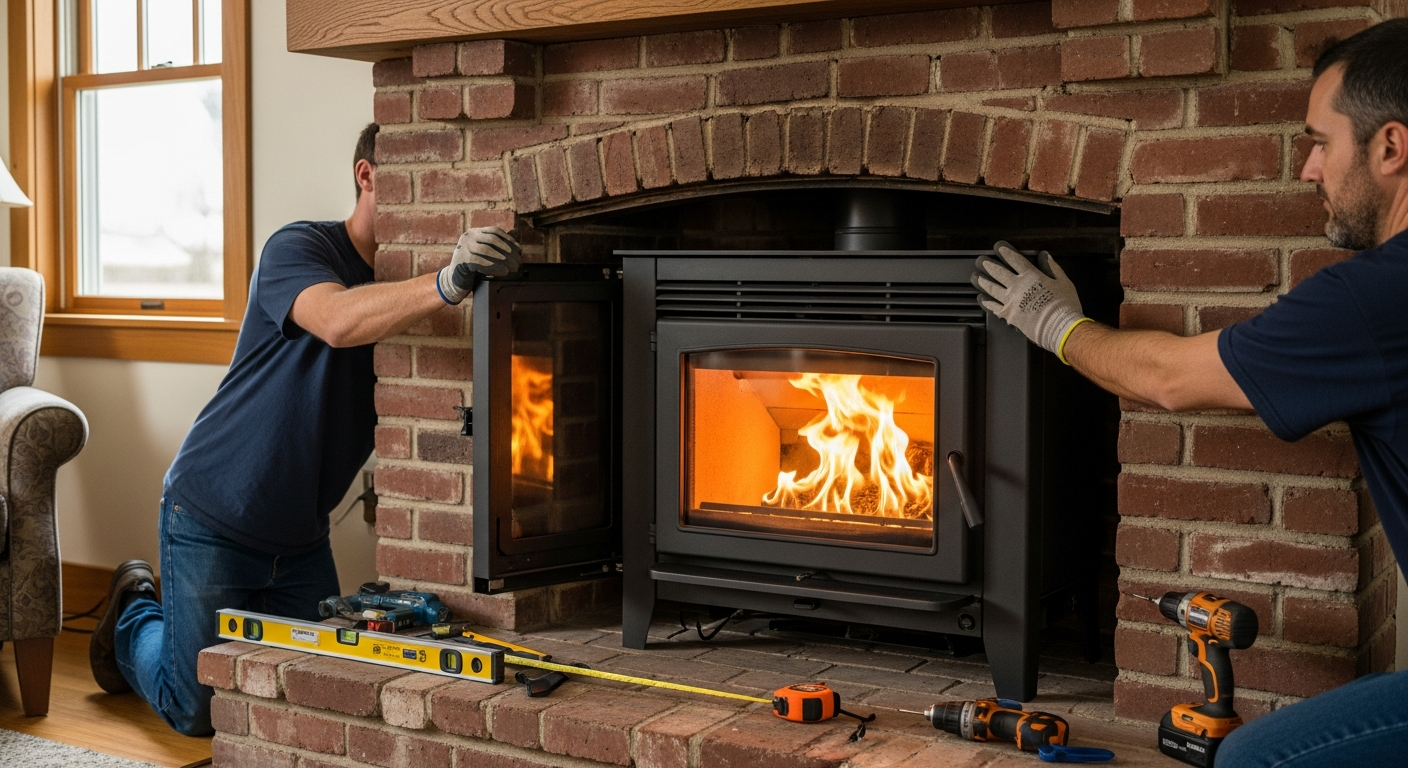
Fireplace inserts offer a cost-effective way to transform old, inefficient fireplaces into modern, high-performance heating systems. This comprehensive guide covers everything you need to know about fireplace inserts, from what they are to installation and top brands.
What is a Fireplace Insert?
Definition
Fireplace Insert Explained:- Unit designed to fit into existing fireplace opening
- Seals off old fireplace
- Modern combustion system inside
- Efficient heat extraction
- Transforms performance dramatically
- Insert fits into existing opening
- Creates sealed combustion chamber
- Modern technology inside
- Efficient heat extraction
- Much better performance
- Can maintain existing appearance
- Modern performance inside
- Best of both worlds
- Preserves character
- Modernizes function
When Inserts Make Sense
Best Scenarios
Old Inefficient Fireplace:- Existing fireplace inefficient (10-30%)
- Want dramatic improvement
- Structure is sound
- Opening suitable
- Perfect candidate
- Like existing appearance
- Want to preserve character
- Modernize performance only
- Keep traditional feel
- Best solution
- Lower cost than replacement
- Want efficiency improvement
- Limited budget
- Cost-effective solution
- Good value
- Less disruptive
- Faster completion
- Simpler process
- Less construction
- Quicker solution
- Want dramatic efficiency gain
- 10-30% to 70-85% improvement
- Significant fuel savings
- Better performance
- Worth investment
When Inserts Don't Make Sense
Damaged Fireplace:- Structural damage
- Beyond repair
- Needs replacement
- Not suitable
- New fireplace needed
- Opening too small/large
- Modifications expensive
- May not be feasible
- Check feasibility
- May need replacement
- Switching fuel types
- Different requirements
- May need new system
- Check feasibility
- May need replacement
- Want complete design change
- Different aesthetic
- New look desired
- Insert may not achieve
- New fireplace better
Measuring for Inserts
Critical Measurements
Opening Width:- Measure at narrowest point
- Top, middle, bottom
- Use smallest measurement
- Critical dimension
- Must be accurate
- Measure from hearth to top
- Front and back
- Use appropriate measurement
- Critical dimension
- Must be accurate
- Measure front to back
- At top and bottom
- Use appropriate measurement
- Important dimension
- Must be accurate
- Measure flue dimensions
- Check compatibility
- Important consideration
- Must match
- Critical factor
Measurement Tips
Accuracy:- Measure multiple times
- Use smallest dimensions
- Be precise
- Critical for fit
- Accuracy essential
- Professional measurement recommended
- Ensures accuracy
- Avoids mistakes
- Worth investment
- Professional assessment
- Using largest dimensions
- Not measuring flue
- Inaccurate measurements
- Measure carefully
- Avoid mistakes
Efficiency Improvements
Dramatic Improvements
Typical Improvements:- Old open fireplace: 10-30% efficiency
- With insert: 70-85% efficiency
- Improvement: 40-75% efficiency gain
- Dramatic improvement
- Significant upgrade
- 50-70% fuel reduction possible
- Significant cost savings
- Lower running costs
- Better value
- Excellent return
- Old fireplace: €1,200/year fuel
- With insert: €400-€600/year fuel
- Savings: €600-€800/year
- Pays for itself
- Excellent investment
Why Inserts Are So Efficient
Sealed Combustion:- Sealed system
- Better air control
- Efficient burning
- Less waste
- Better performance
- Efficient heat exchangers
- Maximum heat transfer
- Better extraction
- More heat to room
- Superior performance
- Latest technology
- Optimized design
- Better efficiency
- Superior performance
- Modern systems
Installation Process
Installation Steps
Step 1: Assessment- Measure opening
- Check flue compatibility
- Assess structure
- Verify feasibility
- Professional assessment
- Clean existing fireplace
- Prepare opening
- Check clearances
- Prepare area
- Ready for installation
- Install insert
- Connect to flue
- Seal properly
- Test operation
- Professional installation
- Finish around insert
- Complete appearance
- Final touches
- Professional finish
- Complete installation
Installation Timeline
Typical Timeline:- Assessment: 1 week
- Installation: 1-2 days
- Finishing: 1-2 days
- Total: 2-4 weeks
- Flue modifications needed
- Finishing complexity
- Availability
- Coordination
- Varies by project
Top Insert Brands
Premium Brands
Brunner:- German quality
- Excellent inserts
- High efficiency
- Reliable performance
- Well-regarded
- Precision engineering
- Modern designs
- High efficiency
- Quality construction
- Professional grade
- German engineering
- Excellent inserts
- High quality
- Reliable
- Popular choice
Choosing a Brand
Considerations:- Efficiency ratings
- Design preference
- Budget
- Availability
- Service support
- Warranty
- Compare models
- Read reviews
- Check specifications
- Verify availability
- Consider service
Cost vs New Fireplace
Cost Comparison
Insert Costs:- Product: €2,000-€6,000
- Installation: €500-€2,000
- Finishing: €300-€1,500
- Total: €2,800-€9,500
- Product: €2,000-€15,000+
- Removal: €500-€1,500
- Installation: €1,000-€5,000
- Flue work: €2,000-€5,000 (if needed)
- Finishing: €500-€5,000
- Total: €4,000-€31,500+
- Inserts typically 30-50% less expensive
- Significant savings
- Better value
- Cost-effective
- Worth considering
ROI Analysis
Insert Investment:- Typical cost: €3,000-€8,000
- Efficiency improvement: 40-75%
- Fuel savings: €600-€800/year
- Payback: 4-13 years
- Good return
- Significant fuel savings
- Better efficiency
- Improved performance
- Cost-effective
- Worth investment
Types of Inserts
Wood-Burning Inserts
Characteristics:- Wood fuel
- High efficiency (70-85%)
- Real flames
- Traditional feel
- Excellent heating
- Want wood fuel
- High efficiency desired
- Real flames wanted
- Primary heating
- Traditional preference
Gas Inserts
Characteristics:- Gas fuel
- Good efficiency (70-90%)
- Convenient operation
- Clean burning
- Easy to use
- Want gas convenience
- Good efficiency desired
- Easy operation wanted
- Clean operation
- Convenience priority
Electric Inserts
Characteristics:- Electric fuel
- Simple installation
- No flue needed
- Easy operation
- Low maintenance
- Simplest solution
- No flue available
- Easy installation
- Low maintenance
- Simple operation
Choosing the Right Insert
Decision Factors
1. Existing Fireplace:- Condition assessment
- Opening size
- Flue compatibility
- Structure soundness
- Feasibility check
- Wood, gas, or electric
- Consider availability
- Compare costs
- Consider convenience
- Choose preference
- Want maximum efficiency
- Consider fuel savings
- Long-term value
- Efficiency important
- Worth investment
- Initial cost
- Installation cost
- Total investment
- Compare to replacement
- Plan budget
- Want to preserve look
- Modernize performance
- Keep character
- Update function
- Balance factors
FAQ
Q: What is a fireplace insert?A: Unit designed to fit into existing fireplace opening, transforming old inefficient fireplace into modern high-performance system. Dramatically improves efficiency.
Q: How much more efficient is an insert?A: Dramatic improvement. Old open fireplaces: 10-30% efficiency. With insert: 70-85% efficiency. Improvement of 40-75% efficiency possible.
Q: Do inserts require flue modifications?A: Sometimes. May need flue sizing adjustments or lining. Professional assessment determines requirements. May add cost but often worth it.
Q: Can I install an insert myself?A: Not recommended. Professional installation essential for safety, efficiency, and compliance. Incorrect installation reduces benefits and creates risks.
Q: How do I know if my fireplace is suitable for an insert?A: Professional assessment needed. Factors: opening size, flue condition, structure soundness. Assessment determines suitability and requirements.
Q: What if my opening is wrong size?A: Modifications may be possible but add cost. May need to enlarge or reduce opening. Professional assessment determines feasibility and cost.
Q: Are inserts cheaper than new fireplaces?A: Yes, typically 30-50% less expensive. Lower product cost, less installation work, less finishing. More cost-effective option.
Q: Can inserts use different fuel than original?A: Sometimes. Wood to gas may be possible with modifications. Electric inserts work in any opening. Assessment needed for feasibility.
Q: How long do inserts last?A: 15-25 years with proper maintenance. Similar lifespan to new fireplaces. Quality and maintenance affect lifespan.
Q: What's the payback period for an insert?A: Typically 4-13 years depending on fuel savings. Efficiency improvement and fuel cost reduction provide return on investment.
Next Steps
Now that you understand fireplace inserts:
- Assess your fireplace - Condition, opening size, feasibility
- Calculate potential savings - Efficiency improvement, fuel savings
- Compare to replacement - Cost comparison, benefits
- Get professional assessment - Verify suitability, get recommendations
- Make decision - Choose insert or replacement
Related Guides
Explore Products
Fireplace inserts offer cost-effective way to dramatically improve efficiency. With proper selection and installation, they transform old fireplaces into modern high-performance systems. Book a consultation: Contact Seminee Dragon