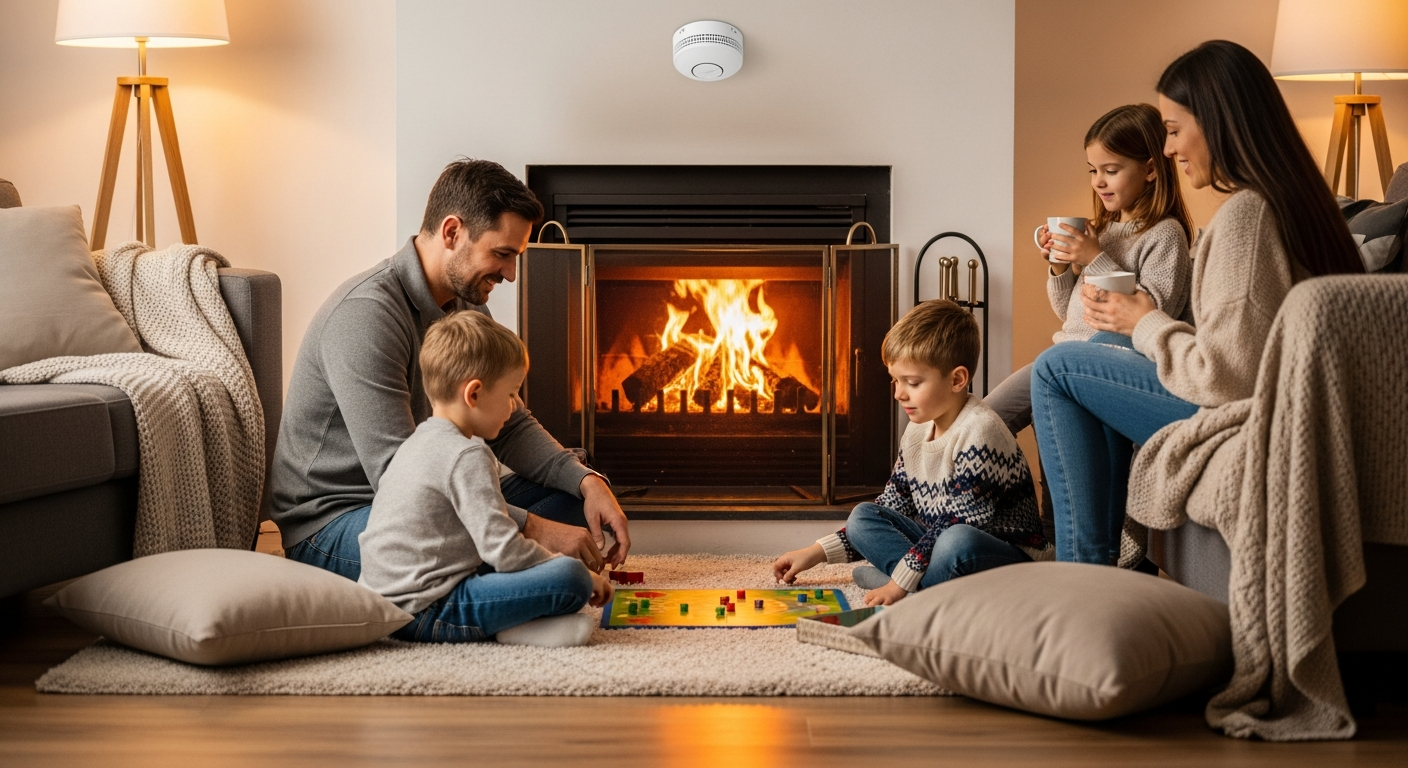
A fireplace adds warmth and ambiance to your home, but safety must always come first. Whether you're installing a new fireplace or using an existing one, understanding and following safety guidelines protects your family and property. Here are essential safety tips for Romanian homeowners.
Carbon Monoxide Safety
Understanding the Risk
Carbon monoxide (CO) is a colorless, odorless gas produced by combustion. It's extremely dangerous and can be fatal in high concentrations.
Sources in Fireplaces:- Wood-burning fireplaces (if not properly vented)
- Gas fireplaces (if malfunctioning or improperly vented)
- Pellet stoves (if venting fails)
- Any fuel-burning appliance
- Headaches
- Dizziness
- Nausea
- Confusion
- Fatigue
- In severe cases: unconsciousness, death
Prevention Measures
1. Install CO Detectors- Place detectors near fireplaces and bedrooms
- Install on every level of your home
- Test monthly, replace batteries annually
- Replace detectors every 5-7 years
- Never ignore alarm sounds
- All wood and gas fireplaces must be properly vented
- Flue/chimney must be clear and functioning
- Never block vents or flues
- Regular inspection ensures proper venting
- Don't use outdoor heaters indoors
- Don't use generators or grills inside
- Only use appliances designed for indoor use
- Follow manufacturer instructions
- Soot around fireplace
- Yellow or orange flames (gas) instead of blue
- Condensation on windows
- Headaches when fireplace is in use
- Pilot light frequently going out
- Evacuate immediately
- Call emergency services
- Don't re-enter until cleared by professionals
- Get medical attention if symptoms present
Clearance Distances
Why Clearances Matter
Clearance distances prevent fires by ensuring combustible materials don't get too hot. Every fireplace has specific clearance requirements that must be followed.
Wood-Burning Fireplaces
Typical Clearances:- Walls: 50-100cm minimum (varies by model)
- Ceiling: 80-120cm minimum
- Furniture: 100-150cm minimum
- Floor: Varies (check if floor protection needed)
- Never place furniture too close
- Keep curtains and drapes away
- Don't hang decorations near fireplace
- Maintain clearances even when not in use
- Check manufacturer specifications for your model
Gas Fireplaces
Typical Clearances:- Walls: 30-50cm minimum
- Ceiling: 50-80cm minimum
- Furniture: 50-100cm minimum
- Varies by system - Check manufacturer requirements
General Clearance Rules
Always Maintain:- Clear space around fireplace
- No combustible materials in clearance zone
- Proper ventilation space
- Access for maintenance
- Safe exit routes
- Placing furniture too close
- Hanging decorations in clearance zone
- Storing items near fireplace
- Blocking ventilation
- Ignoring manufacturer requirements
Child Safety
Protecting Children Around Fireplaces
Fireplaces pose specific risks to children. Proper precautions are essential.
Physical Barriers
Fireplace Screens:- Use screens for open fireplaces
- Prevents direct contact with flames
- Prevents sparks from escaping
- Choose sturdy, well-fitted screens
- Check screens are secure before use
- Glass gets extremely hot (can cause severe burns)
- Children may not understand danger
- Use barriers even with glass doors
- Supervise children closely
- Teach children never to touch
- Install gates around fireplace area
- Prevents access when unsupervised
- Use for toddlers and young children
- Ensure gates are properly installed
- Check gates are secure
Education and Supervision
Teach Children:- Fireplaces are hot and dangerous
- Never touch fireplace or glass
- Stay away from fireplace area
- Never play near fireplace
- Tell adults if something seems wrong
- Never leave children unsupervised near fireplace
- Keep matches and lighters out of reach
- Teach fire safety from early age
- Practice fire escape plans
- Set clear boundaries
Additional Precautions
Safety Measures:- Keep fireplace tools out of reach
- Store fuel (wood, pellets) safely away
- Use child-resistant controls if available
- Install safety locks on gas controls
- Keep emergency numbers accessible
Proper Operation
Safe Fireplace Use
Proper operation prevents accidents and ensures safety.
Wood-Burning Fireplaces
Safe Practices:- Use only dry, seasoned wood
- Never use treated wood, painted wood, or trash
- Build fires properly (don't overload)
- Never leave fire unattended
- Extinguish completely before leaving
- Keep fire at manageable size
- Use fireplace tools safely
- Never use accelerants (gasoline, etc.)
- Clean ashes regularly (when cool)
- Have chimney cleaned annually
- Check for creosote buildup
- Inspect for damage regularly
- Keep area around fireplace clear
Gas Fireplaces
Safe Practices:- Follow manufacturer instructions
- Check pilot light is working
- Never block vents
- Use only as intended
- Don't modify or repair yourself
- Have serviced annually
- Check for gas leaks (smell, hissing)
- Know how to shut off gas
- Yellow or orange flames (should be blue)
- Soot or black marks
- Pilot light frequently going out
- Unusual odors
- Condensation on windows
- Don't light matches or use electrical switches
- Evacuate immediately
- Call gas company or emergency services
- Don't re-enter until cleared
Electric Fireplaces
Safe Practices:- Check electrical capacity
- Don't overload circuits
- Keep away from water
- Don't cover or block vents
- Unplug when not in use
- Check cords for damage
- Follow manufacturer instructions
Bioethanol Fireplaces
Safe Practices:- Use only recommended fuel
- Never overfill
- Ensure adequate room ventilation
- Extinguish completely before refueling
- Store fuel safely
- Keep away from flammable materials
- Never move while lit
Maintenance and Inspection
Regular Maintenance Prevents Problems
Proper maintenance is essential for safety and performance.
Annual Professional Inspection
What's Checked:- Flue/chimney condition
- Venting system
- Appliance condition
- Safety systems
- Clearances
- Compliance
- Licensed chimney sweeps (wood)
- Certified gas technicians (gas)
- Qualified electricians (electric)
- Manufacturer-authorized service
- Wood-burning: Annually (before heating season)
- Gas: Annually
- Electric: Every 2-3 years (or as needed)
- Bioethanol: Annually
Regular Cleaning
Wood-Burning:- Remove ashes regularly (when completely cool)
- Clean glass doors
- Check for creosote buildup
- Inspect firebox for damage
- Clean around fireplace
- Clean glass regularly
- Check pilot light
- Clean burners (if accessible)
- Inspect vents
- Check for soot buildup
- Clean exterior regularly
- Check for dust buildup
- Inspect electrical connections
- Clean vents
- Check for damage
Warning Signs Needing Attention
Seek Professional Help If:- Smoke backing into room
- Unusual odors
- Soot buildup
- Difficulty starting fires
- Poor performance
- Visible damage
- Unusual sounds
- Pilot light problems
Fire Safety
General Fire Safety Measures
Smoke Alarms:- Install on every level
- Test monthly
- Replace batteries annually
- Replace alarms every 10 years
- Never disable alarms
- Keep near fireplace (but not too close)
- Know how to use it
- Check pressure regularly
- Replace when expired
- Have appropriate type (Class A for wood)
- Plan escape routes
- Practice with family
- Know two ways out of every room
- Designate meeting point outside
- Teach children the plan
- Keep emergency numbers accessible
- Know how to shut off gas/electricity
- Have first aid kit available
- Keep fire blanket accessible
- Know your address for emergency services
Fuel Storage Safety
Safe Fuel Storage
Wood Storage:- Store outside, away from house
- Keep dry and covered
- Don't store too close to house
- Stack properly to prevent falling
- Keep away from children
- Store in dry location
- Keep in original bags or sealed containers
- Protect from moisture
- Don't store near heat sources
- Check for pests
- Store in cool, dry place
- Keep in original containers
- Keep away from heat and flames
- Store out of reach of children
- Don't store near fireplace
- Store outside if possible
- Keep upright and secure
- Protect from heat and sunlight
- Check for leaks regularly
- Follow manufacturer guidelines
Apartment and Multi-Unit Safety
Special Considerations
Building Regulations:- Check building rules before installation
- Some buildings prohibit certain fuel types
- May require building approval
- Neighbor considerations
- Fire safety regulations apply
- Ensure adequate room ventilation
- Don't block air vents
- May need additional ventilation
- Check building requirements
- Consider impact on neighbors
- Professional installation essential
- Must meet building codes
- May need building permits
- Compliance with regulations
- Proper documentation needed
Emergency Procedures
What to Do in Emergencies
Fire Emergency:- Evacuate immediately
- Call emergency services (112 in Romania)
- Don't try to fight large fires yourself
- Close doors behind you
- Go to meeting point
- Don't re-enter until cleared
- Don't light matches or use electrical switches
- Evacuate immediately
- Call gas company or emergency services
- Don't re-enter until cleared
- Get medical attention if needed
- Evacuate immediately
- Call emergency services
- Get fresh air
- Get medical attention if symptoms
- Don't re-enter until cleared
- Evacuate immediately
- Check if fire is contained
- Call emergency services if needed
- Check flue/chimney for problems
- Get professional help
Safety Checklist
Before Each Use
- [ ] Clear area around fireplace
- [ ] Check clearances are maintained
- [ ] Ensure proper ventilation
- [ ] Check smoke/CO detectors working
- [ ] Verify flue is clear (wood)
- [ ] Check pilot light (gas)
- [ ] Have fire extinguisher accessible
- [ ] Children supervised
Weekly
- [ ] Clean ashes (wood)
- [ ] Check for damage
- [ ] Verify safety barriers secure
- [ ] Test smoke alarms
- [ ] Check fuel storage
Monthly
- [ ] Deep clean fireplace
- [ ] Inspect for problems
- [ ] Check clearances
- [ ] Test CO detectors
- [ ] Review safety procedures
Annually
- [ ] Professional inspection
- [ ] Chimney cleaning (wood)
- [ ] Service (gas/electric)
- [ ] Review and update safety plan
- [ ] Check all safety equipment
Related Resources
Get Professional Help
Safety starts with proper installation and maintenance. Our team can help ensure your fireplace is installed and maintained safely:
- Professional installation
- Safety inspections
- Maintenance services
- Compliance verification
- Expert guidance
Safety is non-negotiable. By following these guidelines and maintaining your fireplace properly, you can enjoy the warmth and beauty of your fireplace while keeping your family and home safe.