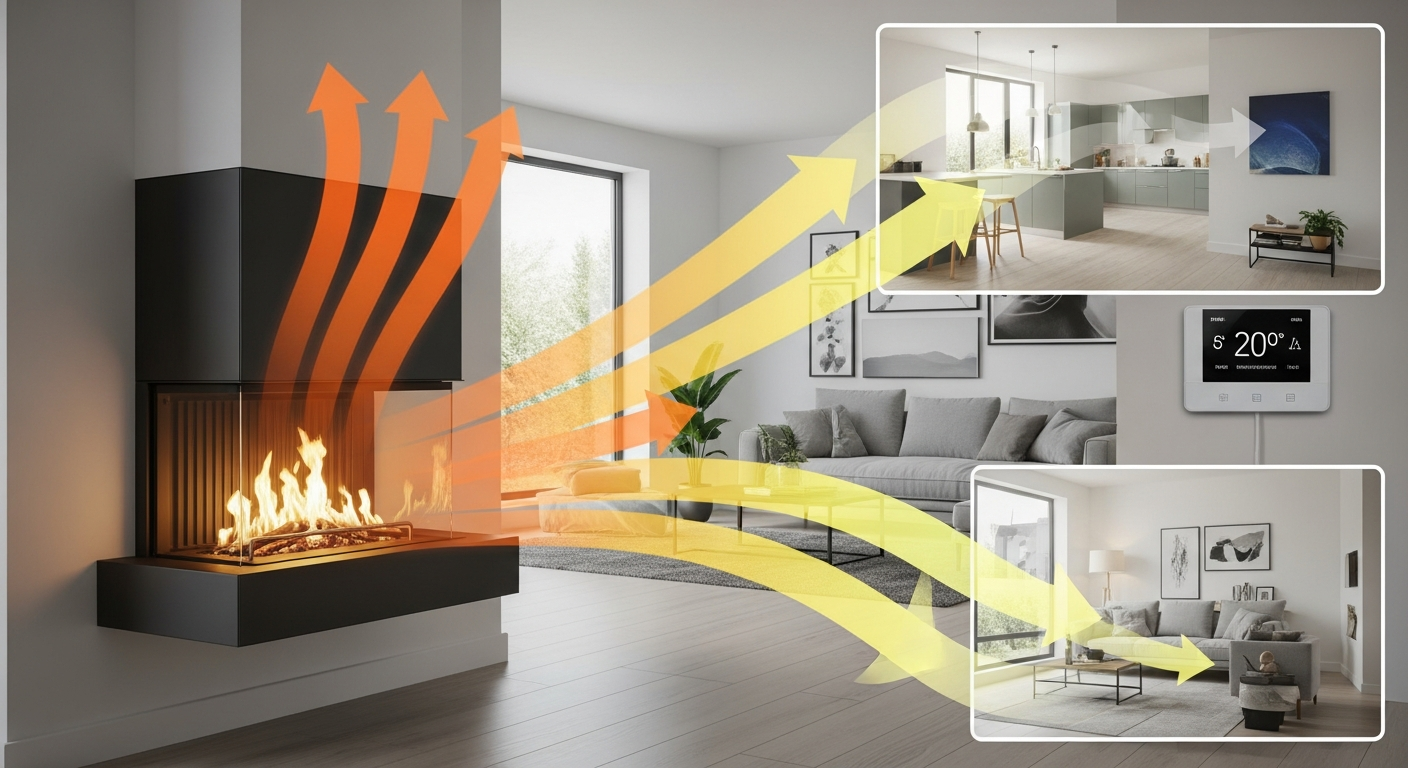
Getting the most heat from your fireplace while minimizing fuel consumption saves money and reduces environmental impact. Whether you have a wood-burning, gas, or pellet fireplace, these expert tips will help you maximize efficiency and performance.
Understanding Fireplace Efficiency
What Efficiency Means
Efficiency Definition:- Percentage of fuel energy converted to usable heat
- Higher efficiency = more heat from same fuel
- Lower efficiency = more fuel wasted
- Modern systems: 70-90% efficiency
- Older systems: 30-60% efficiency
- Lower fuel costs
- Better heating performance
- Reduced environmental impact
- More value from investment
- Better comfort
Efficiency Ratings
Wood-Burning:- Open fireplaces: 10-30% efficiency
- Closed fireplaces: 60-85% efficiency
- Modern stoves: 70-85% efficiency
- EcoDesign compliant: 75%+ efficiency
- Older models: 60-70% efficiency
- Modern models: 70-90% efficiency
- High-efficiency: 85-90% efficiency
- Modern stoves: 80-90% efficiency
- Very efficient option
- Automated operation helps
- 100% efficient at point of use
- But electricity generation is less efficient
- Overall efficiency: 30-40% (generation losses)
Wood-Burning Fireplace Efficiency
Proper Fire Building
Start with Good Foundation:- Use dry, seasoned wood
- Build fire properly (small logs on bottom, larger on top)
- Use kindling and fire starters
- Don't overload initially
- Let fire establish before adding more wood
- Maintain steady burn
- Don't let fire smolder (inefficient)
- Add wood regularly (not all at once)
- Control air intake properly
- Keep fire at optimal size
- Use air controls correctly
- More air = hotter, faster burn
- Less air = slower, more efficient burn
- Find balance for your needs
- Don't restrict air too much (creates creosote)
Fuel Quality Matters
Use Seasoned Wood:- Dry wood burns efficiently
- Wet wood wastes energy (evaporating water)
- Seasoned wood: 6-12 months dried
- Moisture content: 15-20% ideal
- Test: Dry wood is lighter, cracks at ends
- Hardwoods (oak, beech): Higher heat, longer burn
- Softwoods (pine, fir): Easier to light, faster burn
- Mix for best results
- Avoid treated or painted wood
- Use appropriate size logs
- Store wood properly (covered, off ground)
- Keep dry
- Allow air circulation
- Don't store too close to house
- Rotate stock (oldest first)
Draft Optimization
Ensure Good Draft:- Clean chimney regularly
- Check for obstructions
- Verify flue height adequate
- Keep damper open when burning
- Ensure proper flue sizing
- Poor draft = inefficient burning
- Smoke in room = draft issue
- Difficulty starting = draft problem
- Address draft issues promptly
- Professional help if needed
- Clean chimney (annual minimum)
- Check flue height
- Verify no obstructions
- Ensure proper air supply
- Consider draft stabilizer if needed
Operation Tips
Optimal Operation:- Burn hot fires (not smoldering)
- Maintain steady temperature
- Don't let fire die down too much
- Add wood before fire gets too low
- Use right amount of wood
- Overloading with wood
- Restricting air too much
- Using wet wood
- Letting fire smolder
- Not cleaning regularly
- Burn smaller, hot fires
- Use dry, seasoned wood
- Maintain proper air control
- Clean regularly
- Service annually
Gas Fireplace Efficiency
Proper Operation
Optimal Settings:- Use appropriate heat output
- Don't run at maximum unnecessarily
- Use variable controls effectively
- Set comfortable temperature
- Adjust for conditions
- Start at lower setting, increase if needed
- Use timer functions
- Don't leave running when not needed
- Use zone heating effectively
- Maintain consistent operation
Maintenance for Efficiency
Regular Cleaning:- Clean glass regularly
- Clean burners (if accessible)
- Check for soot buildup
- Clean vents
- Annual professional service
- Verify pilot light working
- Check gas pressure
- Inspect burners
- Verify venting clear
- Address issues promptly
- Professional inspection
- Efficiency check
- Component cleaning
- Adjustment if needed
- Prevents efficiency loss
Venting Optimization
Proper Venting:- Ensure vents clear
- Check for obstructions
- Verify vent sizing correct
- Maintain proper draft
- Address venting issues
- More efficient than traditional
- Better heat retention
- Reduced heat loss
- Consider if upgrading
Pellet Stove Efficiency
Optimal Operation
Proper Settings:- Use appropriate heat output
- Program thermostat correctly
- Use automatic features effectively
- Don't oversize for room
- Maintain steady operation
- Use quality pellets
- Store pellets properly (dry)
- Check pellet quality
- Avoid damaged pellets
- Use recommended pellets
Maintenance
Regular Cleaning:- Clean burn pot regularly
- Clean heat exchanger
- Clean exhaust system
- Empty ash regularly
- Annual professional service
- Check auger operation
- Verify blower working
- Check seals and gaskets
- Inspect electrical components
- Address issues promptly
General Efficiency Tips
Room Insulation
Improve Insulation:- Better insulation = less heat loss
- Seal windows and doors
- Insulate walls and roof
- Reduce drafts
- Keep heat in room
- Reduces heat loss
- Fireplace works more efficiently
- Lower fuel consumption
- Better comfort
- Lower costs
Room Layout
Optimize Heat Distribution:- Don't block heat flow
- Arrange furniture appropriately
- Use fans to circulate heat
- Consider room layout
- Maximize heat distribution
- Don't block fireplace
- Maintain clearances
- Allow heat circulation
- Position furniture for comfort
- Consider heat flow patterns
Zone Heating
Use Zone Heating:- Heat only rooms you use
- Close doors to unused rooms
- Use fireplace for main area
- Supplement with other heating
- More efficient than whole-house
- Lower fuel consumption
- More efficient use
- Better comfort where needed
- Lower costs
- More control
Efficiency by Fireplace Type
Wood-Burning Efficiency Tips
Maximize Efficiency:- Use dry, seasoned wood (15-20% moisture)
- Build fires properly (hot, not smoldering)
- Control air intake correctly
- Clean chimney annually
- Use appropriate size logs
- Maintain steady burn
- Don't overload firebox
- Service annually
- Proper operation: +20-30% efficiency
- Dry wood: +15-25% efficiency
- Regular cleaning: +10-15% efficiency
- Proper sizing: +10-20% efficiency
Gas Fireplace Efficiency Tips
Maximize Efficiency:- Use appropriate heat output
- Clean regularly
- Annual professional service
- Ensure proper venting
- Use variable controls effectively
- Don't run unnecessarily
- Maintain components
- Consider high-efficiency models
- Proper operation: +10-15% efficiency
- Regular maintenance: +5-10% efficiency
- Optimal settings: +5-10% efficiency
Pellet Stove Efficiency Tips
Maximize Efficiency:- Use quality pellets
- Clean regularly
- Program thermostat correctly
- Annual service
- Maintain components
- Use automatic features
- Don't oversize
- Store pellets properly
- Quality pellets: +5-10% efficiency
- Regular cleaning: +5-10% efficiency
- Proper operation: +5-10% efficiency
Measuring Efficiency
Signs of Good Efficiency
Indicators:- Good heat output
- Low fuel consumption
- Clean burning (minimal smoke/soot)
- Steady operation
- Good draft
- Minimal waste
Signs of Poor Efficiency
Warning Signs:- High fuel consumption
- Poor heat output
- Excessive smoke or soot
- Difficulty maintaining fire
- Draft problems
- Frequent issues
- Assess operation practices
- Check fuel quality
- Verify maintenance current
- Consider professional assessment
- Address issues promptly
Cost Savings from Efficiency
Potential Savings
Improved Efficiency:- 20% efficiency gain = 20% fuel savings
- Significant cost reduction
- Better value
- Lower environmental impact
- More comfort
- Wood: €200-€400/year savings (if €1,000/year fuel)
- Gas: €100-€200/year savings (if €500/year fuel)
- Pellets: €100-€200/year savings (if €500/year fuel)
- Savings accumulate over years
- Pays for improvements
- Better value
- Lower total cost of ownership
Common Efficiency Mistakes
Mistakes to Avoid
1. Using Wet Wood- Wastes energy evaporating water
- Creates creosote
- Poor efficiency
- Solution: Use dry, seasoned wood
- Wastes fuel
- Poor combustion
- Inefficient burning
- Solution: Use appropriate amount
- Creates creosote
- Poor combustion
- Inefficient
- Solution: Balance air control
- Reduces efficiency over time
- Causes problems
- Wastes fuel
- Solution: Regular cleaning and service
- Oversized wastes fuel
- Undersized struggles
- Poor efficiency
- Solution: Right size for room
- Inefficient burning
- Smoke problems
- Wastes fuel
- Solution: Maintain chimney/flue
Professional Help
When to Get Help
Consider Professional:- Efficiency concerns
- High fuel consumption
- Draft problems
- Maintenance questions
- Want optimization
- Efficiency assessment
- Operation guidance
- Maintenance recommendations
- Optimization suggestions
- Problem resolution
- Maintains efficiency
- Prevents problems
- Optimizes performance
- Worth the investment
- Saves money long-term
FAQ
Q: How can I improve my fireplace efficiency?A: Use dry, seasoned wood (wood), proper operation, regular cleaning, annual service, optimal settings, and good maintenance practices.
Q: What's the most efficient fireplace type?A: Modern pellet stoves achieve 80-90% efficiency. High-efficiency gas fireplaces reach 85-90%. Modern wood stoves achieve 70-85%.
Q: Does fuel quality affect efficiency?A: Yes significantly. Dry, seasoned wood is much more efficient than wet wood. Quality pellets and proper gas pressure also matter.
Q: How often should I clean my fireplace?A: Wood-burning: Annual chimney cleaning minimum, more if heavy use. Gas: Annual service. Clean glass and components regularly.
Q: Can I improve efficiency of old fireplace?A: Yes. Proper operation, dry wood, regular cleaning, and maintenance help. Consider fireplace insert for significant improvement.
Q: Does room insulation affect efficiency?A: Yes. Better insulation reduces heat loss, making fireplace more effective. Fireplace doesn't have to work as hard.
Q: How much can I save with better efficiency?A: 20% efficiency improvement can save 20% on fuel costs. For €1,000/year fuel, that's €200/year savings.
Q: Should I upgrade for better efficiency?A: Consider if current fireplace is very inefficient, costs are high, or you want better performance. Calculate payback period.
Q: What's the biggest efficiency mistake?A: Using wet wood (wood-burning) or poor maintenance. Both significantly reduce efficiency and waste fuel.
Q: Can draft problems affect efficiency?A: Yes significantly. Poor draft causes inefficient burning, wastes fuel, and reduces performance. Address draft issues promptly.
Related Resources
Get Expert Help
Maximizing efficiency saves money and improves performance. Our team can help:
- Assess your fireplace efficiency
- Provide operation guidance
- Recommend improvements
- Plan maintenance
- Optimize performance
Maximizing efficiency reduces costs, improves performance, and reduces environmental impact. With proper operation, quality fuel, and regular maintenance, you can get the most from your fireplace.