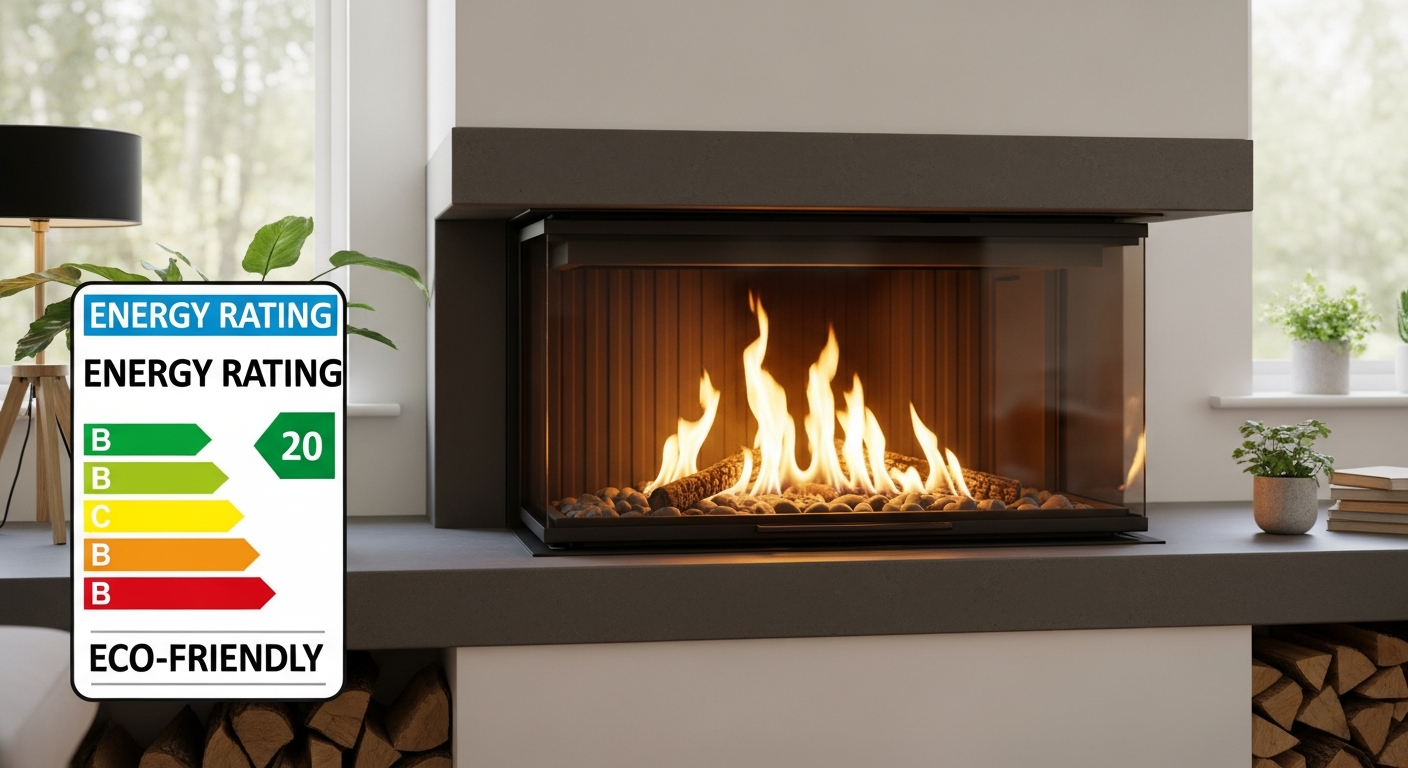
Efficiency ratings are one of the most important factors when choosing a fireplace, yet many buyers don't fully understand what they mean or how they impact performance and costs. This guide explains everything you need to know about fireplace efficiency.
What is Efficiency?
Definition
Efficiency Explained:- Percentage of fuel energy converted to usable heat
- Higher efficiency = more heat from same fuel
- Lower efficiency = more fuel wasted
- Measured as percentage (e.g., 75% efficiency)
- Key performance indicator
- 75% efficiency means 75% of fuel energy becomes heat
- 25% is lost (up chimney, incomplete combustion, etc.)
- Higher efficiency = less waste
- Better value
- Lower costs
Why Efficiency Matters
Cost Impact:- Higher efficiency = lower fuel costs
- Significant savings over time
- Better value for money
- Lower running costs
- Worth the investment
- Higher efficiency = better heat output
- More effective heating
- Better performance
- More comfort
- Superior results
- Higher efficiency = lower emissions
- Less fuel consumed
- Better for environment
- Reduced carbon footprint
- Environmental benefit
How Efficiency is Measured
Testing Standards
EU Standards:- EcoDesign regulations apply
- Standardized testing methods
- Consistent measurements
- Reliable ratings
- Comparable results
- Controlled laboratory conditions
- Standardized fuel
- Precise measurements
- Heat output measured
- Fuel consumption measured
- Efficiency = (Heat Output / Fuel Energy) × 100
- Expressed as percentage
- Standardized method
- Reliable measurement
- Comparable across models
Understanding Ratings
What Ratings Mean:- 50% efficiency = half fuel becomes heat
- 75% efficiency = three-quarters becomes heat
- 90% efficiency = 90% becomes heat
- Higher is better
- Significant differences
- 50% vs 75% efficiency = 50% more fuel needed
- Significant cost difference
- Major performance difference
- Worth understanding
- Important factor
Efficiency by Fireplace Type
Wood-Burning Fireplaces
Open Fireplaces:- Efficiency: 10-30%
- Much heat lost up chimney
- High fuel consumption
- Not suitable as primary heat
- Primarily decorative
- Efficiency: 60-85%
- Much better heat retention
- Lower fuel consumption
- Suitable for heating
- Good efficiency
- Efficiency: 70-85%
- Highest wood efficiency
- Excellent performance
- Best wood option
- Maximum efficiency
- Minimum 75% efficiency required
- Lower emissions
- Better performance
- Required for new installations
- Future-proof
Gas Fireplaces
Traditional Vented:- Efficiency: 70-80%
- Good efficiency
- Reliable performance
- Well-established
- Good option
- Efficiency: 85-90%
- Highest gas efficiency
- Sealed combustion
- Best gas option
- Maximum efficiency
- Efficiency: 60-70%
- Lower efficiency
- No venting needed
- Subject to regulations
- Check local codes
Electric Fireplaces
Efficiency at Point of Use:- 100% efficient
- All electricity becomes heat
- No waste at appliance
- 30-40% overall efficiency
- Electricity generation losses
- Less efficient overall
- But no waste at point of use
- Understand limitations
Pellet Stoves
Efficiency:- 80-90% efficiency
- Highest efficiency available
- Excellent performance
- Best efficiency option
- Maximum efficiency
- Automated operation
- Optimal fuel-air ratio
- Efficient combustion
- Excellent heat extraction
- Best technology
Bioethanol Fireplaces
Efficiency:- 60-70% efficiency typical
- Moderate efficiency
- Real flames
- No flue needed
- Understand limitations
Factors Affecting Efficiency
Design Factors
Combustion System:- Better design = higher efficiency
- Air control systems
- Heat extraction design
- Technology matters
- Design impact
- Efficient heat exchangers
- Maximum heat transfer
- Better extraction = higher efficiency
- Technology factor
- Performance key
- Better sealing = less heat loss
- Air control important
- Reduced waste
- Design factor
- Efficiency impact
Operation Factors
Fuel Quality:- Dry wood burns more efficiently
- Quality pellets perform better
- Fuel quality matters
- Significant impact
- Important factor
- Proper operation improves efficiency
- Optimal settings
- Good practices help
- User impact
- Performance factor
- Regular maintenance maintains efficiency
- Clean systems perform better
- Maintenance matters
- Performance impact
- Efficiency factor
Efficiency Impact on Costs
Cost Calculation
Example: 50% vs 75% Efficiency 50% Efficiency:- Need 2 units fuel for 1 unit heat
- Higher fuel consumption
- Higher costs
- More waste
- Less efficient
- Need 1.33 units fuel for 1 unit heat
- Lower fuel consumption
- Lower costs
- Less waste
- More efficient
- 50% more fuel needed at 50% efficiency
- Significant cost difference
- Major savings possible
- Worth the investment
- Important consideration
Annual Cost Impact
Example: Wood Fireplace 50% Efficiency:- Fuel needed: 2,000 kg/year
- Cost: €800/year
- Higher consumption
- Higher costs
- Fuel needed: 1,333 kg/year
- Cost: €533/year
- Lower consumption
- Lower costs
- Significant savings
- Worth efficiency improvement
- Pays for itself
- Good return
10-Year Cost Impact
50% Efficiency:- Fuel costs (10 years): €8,000
- Higher total cost
- More expensive
- Fuel costs (10 years): €5,330
- Lower total cost
- Less expensive
- Significant long-term savings
- Worth investment
- Excellent return
- Important factor
Choosing by Efficiency
Efficiency Priorities
Maximum Efficiency:- Pellet stoves: 80-90%
- Direct vent gas: 85-90%
- High-efficiency wood: 75-85%
- Best efficiency options
- Lowest costs
- Closed wood fireplaces: 60-85%
- Vented gas: 70-80%
- Good performance
- Reasonable costs
- Good balance
- Open fireplaces: 10-30%
- Vent-free gas: 60-70%
- Higher costs
- Understand trade-offs
- Consider carefully
Efficiency vs Other Factors
Balance Considerations:- Efficiency is important but not only factor
- Consider: cost, convenience, aesthetics
- Balance factors
- Right choice depends on priorities
- Consider all factors
- Primary heating use
- High usage
- Cost-conscious
- Environmental concerns
- Long-term ownership
- Decorative use primarily
- Occasional use
- Aesthetic priority
- Convenience priority
- Different priorities
Improving Efficiency
Existing Fireplace Improvements
Fireplace Inserts:- Dramatic efficiency improvement
- 10-30% to 70-85% possible
- Significant upgrade
- Worth investment
- Excellent improvement
- Use dry, seasoned wood
- Proper operation
- Regular maintenance
- Optimal settings
- Better practices
- Regular cleaning
- Annual service
- Component maintenance
- Maintains efficiency
- Prevents decline
New Installation Considerations
Choose High Efficiency:- Select high-efficiency models
- Consider long-term costs
- Worth investment
- Better value
- Lower costs
- Right size is more efficient
- Don't oversize
- Optimal performance
- Better efficiency
- Important factor
- Professional installation
- Ensures efficiency
- Proper setup
- Optimal performance
- Worth investment
Efficiency Ratings to Look For
Minimum Recommendations
Primary Heating:- Minimum 70% efficiency
- Higher is better
- Worth investment
- Lower costs
- Better performance
- 60%+ acceptable
- Lower priority
- Still consider efficiency
- Balance factors
- Reasonable choice
- Efficiency less critical
- Other factors priority
- Still consider
- Balance factors
- Different priorities
Best Efficiency Options
Top Choices:- Pellet stoves: 80-90%
- Direct vent gas: 85-90%
- High-efficiency wood: 75-85%
- Best efficiency
- Lowest costs
FAQ
Q: What does 75% efficiency mean?A: 75% of fuel energy becomes usable heat. 25% is lost. Higher efficiency means less waste and lower fuel costs.
Q: How much difference does efficiency make?A: Significant. 50% vs 75% efficiency means 50% more fuel needed. Major cost difference over time. Worth considering.
Q: Which fireplace type is most efficient?A: Pellet stoves achieve 80-90% efficiency, highest available. Direct vent gas reaches 85-90%. High-efficiency wood: 75-85%.
Q: Does efficiency affect heat output?A: Yes. Higher efficiency means more heat from same fuel. Better performance. More effective heating.
Q: Can I improve efficiency of existing fireplace?A: Yes. Fireplace inserts can dramatically improve efficiency. Proper operation and maintenance also help. Significant improvements possible.
Q: Is higher efficiency worth higher cost?A: Usually yes. Higher efficiency saves money on fuel. Pays for itself over time. Better long-term value. Worth investment.
Q: How do I know a fireplace's efficiency?A: Check manufacturer specifications. Look for efficiency rating. EcoDesign compliance indicates minimum 75% for wood. Compare ratings.
Q: Does fuel quality affect efficiency?A: Yes significantly. Dry, seasoned wood burns more efficiently than wet wood. Quality pellets perform better. Fuel quality matters.
Q: Can operation affect efficiency?A: Yes. Proper operation improves efficiency. Optimal settings, good practices, regular maintenance all help. User impact matters.
Q: What's a good efficiency rating?A: For primary heating: 70%+ minimum, 75%+ better. For decorative use: Less critical but still consider. Higher is generally better.
Related Resources
Get Expert Help
Understanding efficiency helps you choose the right fireplace. Our team can help:
- Explain efficiency ratings
- Compare options
- Calculate cost impacts
- Recommend efficient models
- Plan your purchase
Efficiency ratings directly impact your heating costs and performance. Understanding what they mean and how they affect you helps you make informed decisions and choose the right fireplace for your needs.